Skills in Demand visa
The Skills in Demand visa (subclass 482) is a temporary employment visa consisting of 3 streams that allows Australian employers to sponsor skilled overseas workers in occupations that are difficult to fill locally. You can stay in Australia up to 4 years with this visa (5 if you have a Hong Kong passport) and there is no age limit. The streams are:
Core Skills stream - Your occupation is on the Core Skills Occupation List, where the nominated salary for the position meets the Core Skills Income Threshold.
Specialist Skills stream - Your occupation is an Australian and New Zealand Standard Classification of Occupations (ANZSCO) occupation listed in Major Groups 1,2,4,5 or 6, where the nominated salary for the position meets the Specialist Skills Income Threshold.
Labour agreement stream - Your employer must have a labour agreement with the Australian Government in effect.

Critical occupations may receive priority visa processing

Designed for hard-to-fill roles across Australia

May lead to permanent residency under the Employer Nomination Scheme (subclass 186) visa



Why choose this visa
This visa allows skilled workers to live and work in Australia temporarily with the support of an approved sponsor. It offers employment for up to four years, the ability to bring eligible family members, and, for those who meet the requirements, a potential pathway to permanent residency.

Work in Australia in an approved skilled occupation

Include eligible family members in your application

Fast-tracked visa options for critical occupations
Work in Australia in an approved skilled occupation
Include eligible family members in your application
Fast-tracked visa options for critical occupations
Timing & processing
Processing times vary depending on factors such as:
- The completeness and accuracy of your application
- Health and character checks
- Industry demand and processing volume
For up to date visa processing times, visit the Home Affairs website.
Click the cards for more information >

1. Check eligibility and employer sponsorship
You must have an employer willing to sponsor you. Your occupation must be listed in the occupation list, and you must meet skill and English language requirements. You must meet the skilled visa income thresholds.

2. Employer lodges nomination
Your employer submits a nomination for your role.

3. Apply for the visa
Once the nomination is lodged, you may submit your application, including proof of skills, qualifications, health, character, and English proficiency.

4. Visa outcome
If approved, your visa allows you to live and work in Australia temporarily (up to 4 years in most cases).

Work where your skills are needed.
Make the smart move to Australia
Australia is calling for skilled workers across critical sectors. Whether it’s construction, health, infrastructure, agribusiness or hospitality — if you’ve got the skills, we’ve got the opportunity. The Skills in Demand visa (subclass 482) could be your ticket to a brighter future.
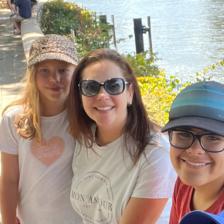
Don’t hesitate and just do it. With so many different states and territories and places to live, you will certainly find the perfect place. The people are very friendly and welcoming towards migrants and there are so many willing to help you on your journey.
Candice de Beer holds undergraduate and post-graduate qualifications in both Psychology and Education. Before she moved to Australia she worked as a teacher in the private sector in South Africa.
Although the first months in Australia were challenging for Candice and her family, she is now working as a primary school relief teacher on the Sunshine Coast, Queensland, and the family is settling in and making the most of the opportunities available. She says she enjoys the flexibility of her work and the many opportunities for professional development.
Candice says she has found her local community to be supportive, and everyone is valued. She is volunteering in her community, and her family have made friends quickly and adapted to their new environment.
Candice de Beer from South Africa
Common Questions
Are my skills in demand in Australia?
Many professions across industries like health, technology, construction, and education are in high demand due to Australia’s growing economy and national priorities. Checking the skilled occupation lists can help you understand where your skills fit.
Explore career pathways to find the best opportunities that match your skills.
What benefits can I expect working in Australia?
Australia offers competitive salaries, strong workplace protections, opportunities for career growth, and access to professional development and training.
Explore your career pathway to discover even more opportunities and take the next step in your professional journey.
Can my partner or family migrate with me?
Yes. Many skilled visas allow you to bring immediate family members. Australia offers schooling, healthcare, and work rights for eligible dependents.
Discover more about family lifestyle in Australia
Is Australia really one of the world’s most liveable countries?
Yes. Australia regularly ranks near the top in global liveability indexes due to its excellent healthcare system, high-quality education, political stability, low crime rates, and well-maintained infrastructure. Many parts of Australia are known for their cultural diversity, recreational opportunities, green spaces, and overall quality of life. Combined with a clean environment and a strong focus on work-life balance, Australia offers an attractive lifestyle for individuals and families alike.
Explore more reasons why Australia is a great place to live, work, and thrive.